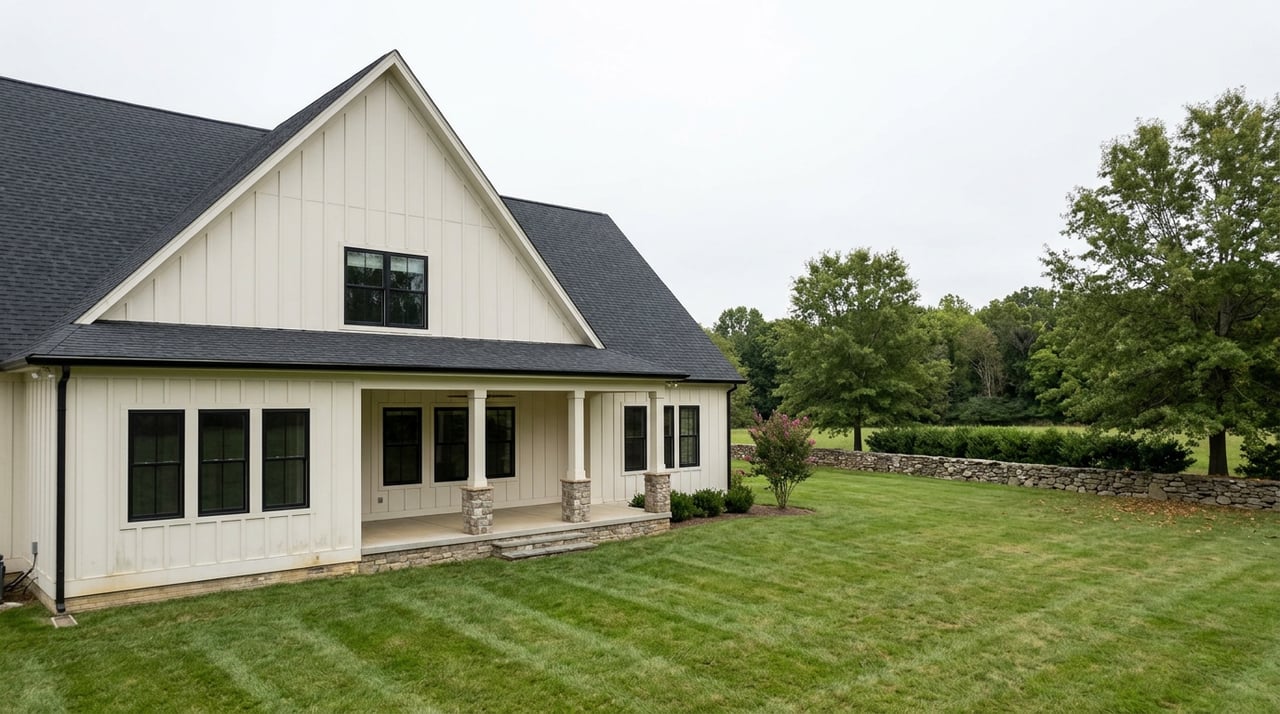
In June 2026, Richmond BizSense reported that a letter went up at the clubhouse at Mill Quarter Plantation and on the course's own website. It was signed by Diane Daniels, and it said what nobody who has played the back nine on a Tuesday afternoon wanted to read. After 52 years, her family was selling the course. The letter didn't dress it up. "After 52 wonderful years, the Daniels family has made the difficult decision to sell the course."
The context behind that sentence matters as much as the sentence itself. David K. Daniels opened the course in 1974. Decades earlier, he'd played college golf at Ohio State, where one of his teammates was a young Jack Nicklaus. His son, David Patrick Daniels, grew up on the property and spent four decades as its general manager. The two men died within months of each other in 2025, the father on October 14 at age 86. Their family had carried Mill Quarter for five decades. The buyer is described in the letter only as a Powhatan native and land developer with a lifelong passion for golf. No name, no announced plan.
If you're looking at homes in Mill Quarter right now, or you already own one, that ambiguity is the actual story. Not the golf course closing. The not knowing.
The Story Everyone Assumes
The intuitive read on a golf course sale is simple: course closes, neighborhood loses its amenity, home values drop. That instinct isn't baseless. Academic research on golf course communities backs it up in one direction. A study published in the Journal of Sustainable Real Estate found that homes in golf course communities sell at roughly a 9 percent premium over comparable homes outside them, and that premium erodes by about 17 percent after the course closes. A separate industry report on Florida golf course redevelopment found declines can run steeper still, in the 25 percent range typically, and as high as 40 to 50 percent when the closure turns into a legal fight between homeowners and the new owner over what happens to the land.
That's the version of the story most people carry around in their heads when they hear "the golf course is closing." Sell now, before the fairway becomes a construction site or, worse, an empty field nobody mows.
The Part of the Story That Doesn't Fit
Here's where it gets interesting, and where a single headline stat stops being useful. A different study, using a closure in Denver as its test case, found no measurable drop in adjacent home prices after that course shut down. None. The researchers' conclusion was that the premium buyers pay for a golf-course lot isn't really about golf. It's about the open space, the quiet, and the view that a course happens to provide. Take away the tee times and leave the green space alone, and the premium can survive intact.
Then there's the redevelopment side of the ledger, which points in a third direction entirely. Research from John Burns Research and Consulting looked at eight shuttered golf courses in South Florida and found that once new home construction actually began on the old fairways, adjacent property values didn't just recover. They outpaced their surrounding market by an average of 27 percent. One specific case, the former Sabal Palm Golf Course, tracked this almost perfectly: values near the course declined for three years while its future sat unresolved, then began climbing as soon as construction on the new Hidden Trails and Manor Parc developments broke ground. By the most recent measure in that report, homes in Hidden Trails had outpaced their ZIP code's overall appreciation by a cumulative 31.4 percent since the closure.
Put those three findings side by side and the pattern isn't "closure equals decline." It's this:
| What happened to the course | What happened to nearby values |
|---|---|
| Closed, future contested in court | Declined 25 to 50 percent |
| Closed, no legal dispute, open space preserved | No measurable decline |
| Closed, then redeveloped into new housing | Outpaced surrounding market once construction started |
The variable that actually predicts the outcome isn't whether the course stays a course. It's whether anyone knows what happens next, and how long that not-knowing drags on.
The Real Mechanism at Mill Quarter
That's the lens worth applying to what's actually on the table in Powhatan. Mill Quarter's holdings run to more than 300 acres of golf course plus another 68 adjacent acres, all zoned R-2, a designation that already permits single-family residential development without a rezoning fight. The county's most recent combined assessment on that land sits around $1.7 million, a number that reflects agricultural and recreational use, not what 375 acres of already-approved residential land near Richmond is actually worth to a developer. That gap between assessed value and development value is very likely the entire reason a Powhatan native land developer is the buyer here, not another golf operator.
The letter states golf operations are expected to end at the conclusion of the 2026 season, likely late October, which puts the transition roughly two months out from where things stand today. What comes after that date is, by the seller's own admission, entirely up to the new owner. It could stay a golf course. It could become a new subdivision. Nobody, including the family that just sold it, has said which.
Mill Quarter isn't an isolated case. Independence Golf Club, which straddles the Chesterfield-Powhatan line, is under contract to Heritage Golf Group, the Northern Virginia firm that also owns Dominion Club in Henrico. The Crossings, a Henrico County-owned course, is headed to North Carolina-based McConnell Golf for what's being described as a significant renovation. Magnolia Green Golf Club was listed for sale with a $6.75 million asking price. Four regional courses trading hands in the same stretch of months is not a coincidence born of one family's timing. It's a market signal that course ownership economics in this region are shifting, and Mill Quarter is simply the one sitting closest to a residential neighborhood that carries the club's name.
What This Means If You're Looking at a Home There Right Now
The uncertainty window is exactly the period the research says carries the real pricing risk, and it's the period Mill Quarter is entering now. That cuts two ways depending on which side of a transaction you're on.
If you're selling in Mill Quarter, the studies suggest the smartest move isn't to panic and price low against an assumed crash. The decline pattern shows up when a closure turns adversarial or drags on for years with no resolution, not automatically the moment a "for sale" sign goes up on the clubhouse.
If you're buying in Mill Quarter, the smartest move is to treat this the way you'd treat any pending zoning or land-use question next door: ask before you assume.
A few questions worth asking before writing an offer on anything backing the course:
- Has Powhatan County received any rezoning application, site plan, or conditional use permit filing tied to the Mill Quarter or Links of Mill Quarter parcels? The county's land use application records are public.
- What does the deed and plat for the specific lot say about the golf course? The National Law Review reports that in several states, courts have found that when a developer plats lots around a course and markets the fairways as a neighborhood amenity, buyers may gain an implied right that the land stay open, sometimes called an easement by plat. Whether anything like that exists for Links of Mill Quarter lots is a title search question, not a Google search question.
- Is the HOA, if one exists for the specific section you're considering, aware of any communication from the new ownership group about intentions for the acreage?
None of those questions require waiting on the sidelines for a year. They just require asking them before the ink dries, which is a habit worth having in any neighborhood built around a shared amenity that isn't guaranteed to stay exactly as it is.
A Few Straight Answers
Will the Mill Quarter homes definitely lose their golf-course backdrop? Nobody, including the seller, has said. The letter is explicit that the future of the course is entirely the new owner's decision. Treat any confident claim otherwise as a guess.
Should I wait to buy in Mill Quarter until the developer announces plans? The data doesn't clearly support waiting as a strategy. The steepest declines in the research show up during drawn-out, contested limbo periods, and the sharpest gains show up once a plan is actually underway. Waiting doesn't remove the uncertainty. It just delays when you're exposed to it. What actually protects you is verifying the title and covenant language on the specific lot now, not waiting for a press release.
Powhatan is a market where the details behind a listing often matter more than the listing photos, and this is one of those moments. If you're weighing a home near Mill Quarter, or wondering what a shift like this means for a neighborhood you already call home, River City Elite Properties can walk through the specific parcel, the county filings, and what they actually mean for your timeline. Schedule Your Listening Appointment and let's look at the details together before you make a decision either way.
This article is general information, not legal, tax or financial advice. Consult a qualified professional about your situation.